
 Post by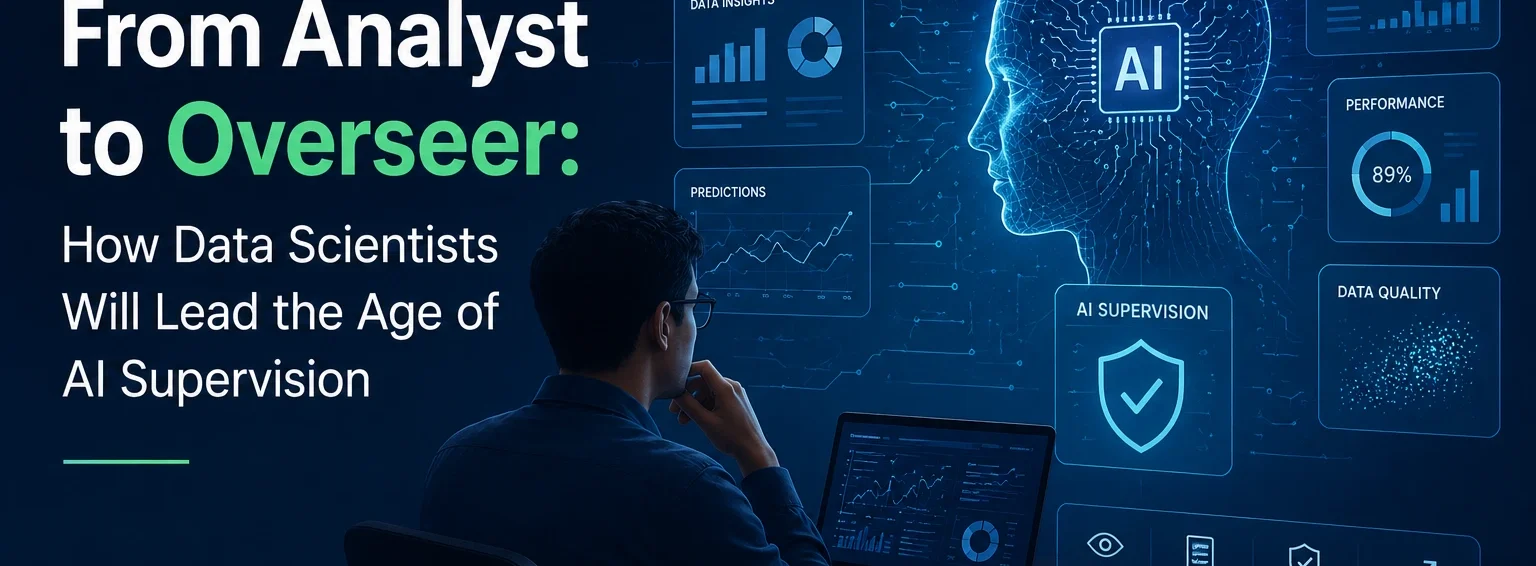
Introduction
The data science profession is undergoing its most significant transformation in decades. AI is now handling tasks that once defined the role – writing SQL queries, cleaning datasets, building dashboards, and running predictive models. What does that mean for data scientists? It means the job is evolving fast, and those who adapt will be more valuable than ever.
At CCPL.AI, we believe the future belongs to data scientists who can think beyond analysis – professionals who govern, monitor, and guide AI systems toward real business outcomes.
Traditional Analytics Is Getting Automated
Repetitive analytical tasks are increasingly being handled by AI with minimal human input. Large language models are now embedded in enterprise tools, automating everything from report generation to machine learning model development.
This isn’t a threat – it’s a shift. The demand for human judgment, oversight, and strategic thinking is rising as execution becomes automated.
AI Systems Still Need Human Oversight
Even the most advanced AI systems make mistakes – hallucinating data, producing biased results, or failing silently in production. That’s why the human-in-the-loop model has become a cornerstone of responsible enterprise AI.
Organizations still need people for:
- AI training and output validation
- Model monitoring and performance tracking
- Risk review and escalation handling
- Final decision approval in high-stakes scenarios
As AI autonomy grows, governance layers expand – not shrink.
The Role Is Shifting: From Analysis to System Ownership
Future data scientists will act more like AI system managers – responsible for monitoring models, auditing for bias, ensuring compliance, and maintaining reliability in real-world environments.
Industries like banking, healthcare, insurance, and government are under increasing regulatory pressure around transparency, explainability, and data privacy. This creates a growing demand for professionals skilled in AI governance, model risk management, and responsible AI – areas where data scientists are naturally positioned to lead.
MLOps and Model Monitoring Are Now Core Skills
Building a model is no longer the finish line. Companies need professionals who can:
- Track model performance continuously
- Detect failures and data drift
- Manage retraining pipelines
- Ensure AI outputs stay accurate as behaviour changes over time
MLOps is fast becoming as essential as statistics or Python.
Communication Becomes a Competitive Advantage
AI outputs still need human interpretation. Executives need professionals who can explain algorithmic decisions, flag risks, and know when to override AI recommendations. Strong communicators with business acumen will be among the most sought-after data professionals in the coming years.
What This Means for Students and Professionals
The fundamentals – Python, SQL, statistics, machine learning – remain important. But they’re no longer enough on their own.
The next generation of data scientists needs to build expertise in:
- AI governance and ethics
- MLOps and model monitoring
- Explainability and fairness auditing
- Risk management and compliance
At CCPL.AI, our programs are designed to prepare professionals for exactly this reality – not just to build AI, but to oversee it responsibly.
Final Thoughts
AI won’t replace data scientists – but it will redefine what makes them valuable. The biggest contribution a data scientist can make in the near future won’t be writing the best model. It will be ensuring that AI systems are reliable, explainable, ethical, and aligned with real business goals.
The shift from analyst to overseer isn’t a step down. It’s a step up.